Blog

29
Jan

The role of the dialogue between the Hippocampus and the Cortex during sleep

What if your professional success depended as much on your nights as on your days? In the chapter dedicated to Memoria, the author explains how the brain consolidates learning during sleep through the dialogue between the hippocampus and the cortex.   The Role of the Hippocampus in Learning Throughout the day, the hippocampus acts as temporary memory storage. It records
Read more

12
Jan

Why so many misunderstandings, resistance, and conflicts arise in organizations ?

In companies, people often talk about facts, data, and objectivity. Yet a large share of professional tension does not come from the facts themselves, but from the way they are perceived.The book Become Will in Motion offers a fundamental insight: human beings never access reality directly. They construct a representation of it. Perception: an invisible filter at the heart of work

Read more

14
Dec

Pindare & Nietzsche

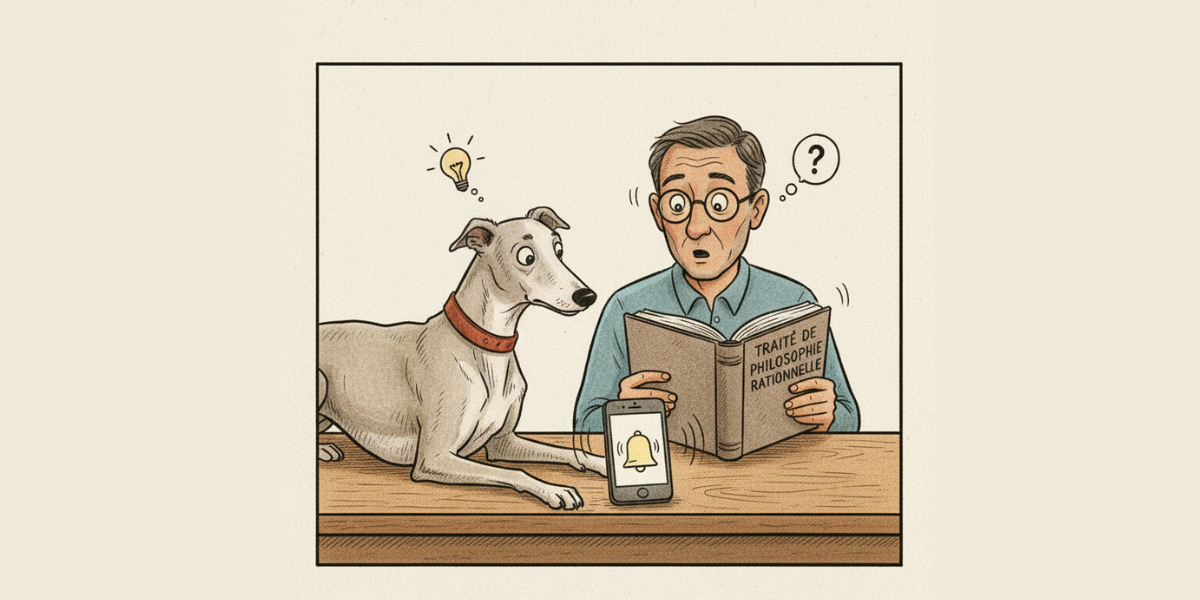
“Become who you are.” An ancient formula that has become our greatest mystery: Does this mean that I have not yet become who I truly am? — Will in Motion As I emphasize in my essay, the real question is this one—absurd and fundamental. That is where the farce lies. We are already ourselves, and yet we spend our lives
Read more

7
Dec

Pavlov’s dog experience

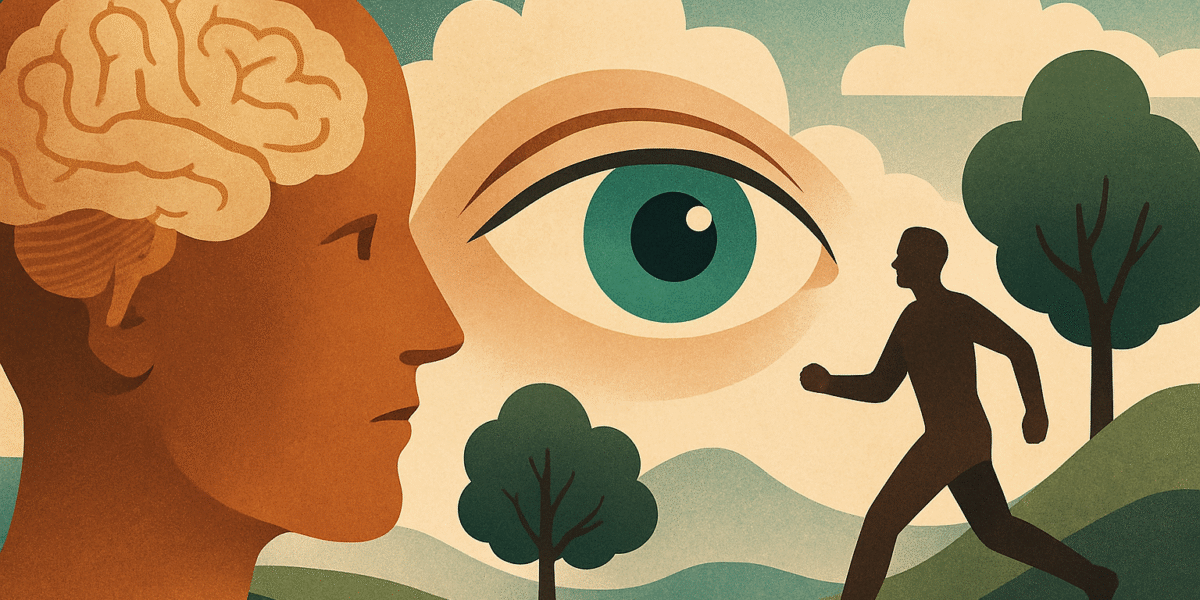
“As illustrated by Pavlov’s dog experiment, our reactions—acquired over time through learning and habit—can turn into reflexes. This conditioning is reversible, provided we choose to reinvent ourselves into someone who truly reflects who we are.”— Will in Motion Ivan Pavlov’s experiment at the dawn of the 20th century isn’t a distant scientific memory; it’s an X-ray of our modern lives.
Read more

2
Jul

Sensitivity, Representation, and Action: A Subtle Mechanism of Life
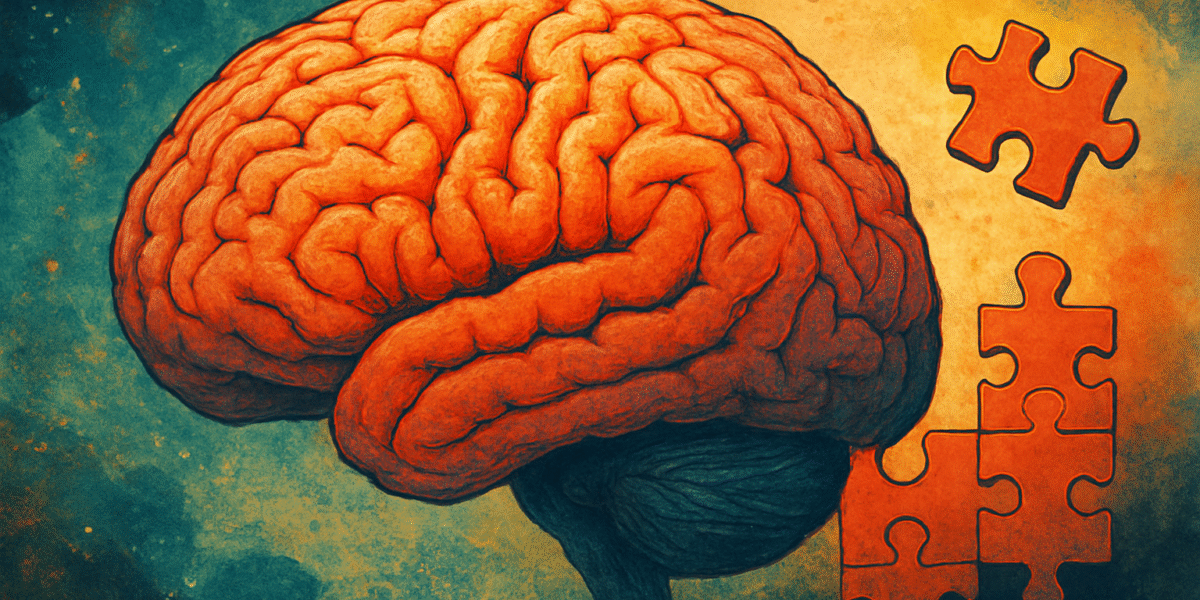
Sensitivity, Representation, and Action: A Subtle Mechanism of Life Sensitivity is much more than a mere ability to perceive stimuli: it is the invisible yet essential foundation of our behaviors. It allows every living being to feel the world, to build a mental representation of it, and to act accordingly. This loop — perceiving, interpreting, acting — lies at the
Read more
2
Jul

The Neocortex: What If Your Consciousness Were a Puzzle in Constant Evolution?

The Neocortex: What If Your Consciousness Were a Puzzle in Constant Evolution? Silent and intricately folded like an inner sea, the neocortex stretches across the surface of the brain, a living parchment upon which the story of our humanity is inscribed. Long overshadowed by instinct, it is, in truth, the seat of our most singular faculties: language, abstract thought, conscious
Read more
13
Jun

Symmetry: When Nature Reveals Its Laws.
Symmetry: When Nature Reveals Its Laws In both physics and mathematics, symmetry refers to the ability to transform a system without altering its observable properties. A face flipped horizontally illustrates a discrete symmetry, while a circle demonstrates continuous symmetry, remaining unchanged regardless of its rotation. Emmy Noether’s theorem establishes that every continuous symmetry in a physical system corresponds to a
Read more
13
Dec

Reading the book Living to the Power of Two: To act is to create your own reality

To act is to create your own reality Intention alone is not enough. Concrete action and conscious choices directly shape our personal reality. Our individual path is defined by the decisions we make and the actions we take—not by mere wishes or abstract thoughts. Every move we make actively builds our future, reinforcing the idea that only real action brings
Read more
10
Dec

Hippocampus, spatial memory and Eleanor McGuire’s research on taxi drivers

The hippocampus is a key region of the brain, essential for spatial memory and navigation. Research by Eleanor McGuire, a neuroscientist at the University of London, has demonstrated a unique brain adaptation in experienced taxi drivers. These studies show that the hippocampus, particularly the posterior part, experiences significant growth linked to the memorization of complex routes. This process is made
Read more
18
Nov

The evolution of taste: a story of survival, chemical adaptation and sensory pleasure

Taste senses, derived from millions of years of evolution, play an essential role in the survival of species. Taste guides animals toward necessary nutrients and away from dangers. Human taste receptors, although focused on the tongue, are also found in the digestive system, analyzing chemical compounds in food and influencing our food choices. These receptors respond to specific molecules: sweet
Read more